
2025 CCF Houston - Post-Conference Report
On December 12, 2025, members of the Canadian Cholangiocarcinoma Collaborative (C3) travelled to Houston, Texas and attended the Cholangiocarcinoma Foundation's (CCF) Houston Day Symposium to connect, learn, and bring back the latest advances in biliary tract cancer (BTC) research and care to our Canadian community.
Houston is one of the world’s leading hubs for cholangiocarcinoma research, home to high-volume centres such as MD Anderson Cancer Center and Houston Methodist Cancer Center. These institutions work closely together to advance research and deliver cutting-edge, multidisciplinary care for people living with cholangiocarcinoma.
We were proud to have eight Canadians representing our community at the symposium, including four C3 patient scholarship recipients, ensuring that the Canadian patient perspective was heard and included throughout the day.

Understanding Phase 1 Clinical Trials in Rare Cancers
The symposium began with a foundational discussion on what clinical trials are, why they are essential, and how they can be improved - especially for rare cancers like cholangiocarcinoma. Dr. Kristen Spencer (NYU) highlighted the unique challenges of running trials in rare diseases, such as small patient populations and strict eligibility criteria, and shared innovative solutions being used during trial design to make studies more inclusive, efficient, and patient-centered.
While Phase 1 trials can place a higher burden on patients and caregivers through travel, costs, frequent testing, and uncertainty, recent advances in patient selection, trial design, and biomarkers have led to improved response rates and a better risk–benefit balance.
The day ended with a guided discussion with clinical trialists from MD Anderson and Houston Methodist. They shared that for Canadians, there is an International Center that can provide assistance and support for accessing trials at MD Anderson:
Nutrition, Exercise, and Supportive Care
We also learned about the important role of nutrition and physical activity throughout the cancer journey. It was emphasized how tailored nutrition and appropriate exercise can support treatment tolerance, recovery, and overall quality of life - both during and after therapy. The talk focused on:
Plant based diets
Lean sources of protein
Calorically dense foods
Reduced sugar and carbohydrates
Daily exercise (low intensity, 20 minutes at least)
Liver Transplantation and Cholangiocarcinoma
One of the most impactful sessions of the day focused on the role of liver transplantation in cholangiocarcinoma. Houston Methodist is at the forefront of this evolving treatment option and has demonstrated significant success, not only in performing transplants, but also in challenging long-held assumptions and expanding eligibility criteria.
Historically, transplantation was considered only for select extrahepatic cholangiocarcinoma (eCCA) cases. However, MD Anderson was among the first centres to push forward transplantation for intrahepatic cholangiocarcinoma (iCCA). The team shared years of research showing how this treatment approach has evolved and where it may fit for carefully selected patients today.
We also heard directly from two patients who shared their personal experiences with transplantation and how it has positively impacted their lives - bringing an invaluable patient perspective to the science.
While the landscape for liver transplantation in Canada is quite different, we remain hopeful that this may become a viable therapeutic option for patients here. We will continue to learn from and collaborate with leading centres in the United States that are advancing this approach.
Advances in ctDNA and Imaging
After lunch, the focus shifted to emerging technologies. We learned about exciting advances in circulating tumor DNA (ctDNA) and cell-free DNA testing, which may serve as promising tools to monitor disease and detect recurrence earlier.
Experts also reviewed imaging strategies, explaining the roles and differences between PET, CT, and MRI scans, and how clinicians decide which imaging modality is most appropriate in different clinical situations.
Novel and Emerging Therapies
A dedicated session explored novel treatment options, including both systemic therapies and locoregional approaches. This included a discussion of histotripsy, an innovative non-invasive therapy that is generating significant interest.
MD Anderson clinicians shared how they approach treatment decision-making and provided a clear overview of upcoming clinical trials, grouped into:
Biomarker-based trials
Driver mutation-based trials
Immune-based trials
Community Dinner and Networking
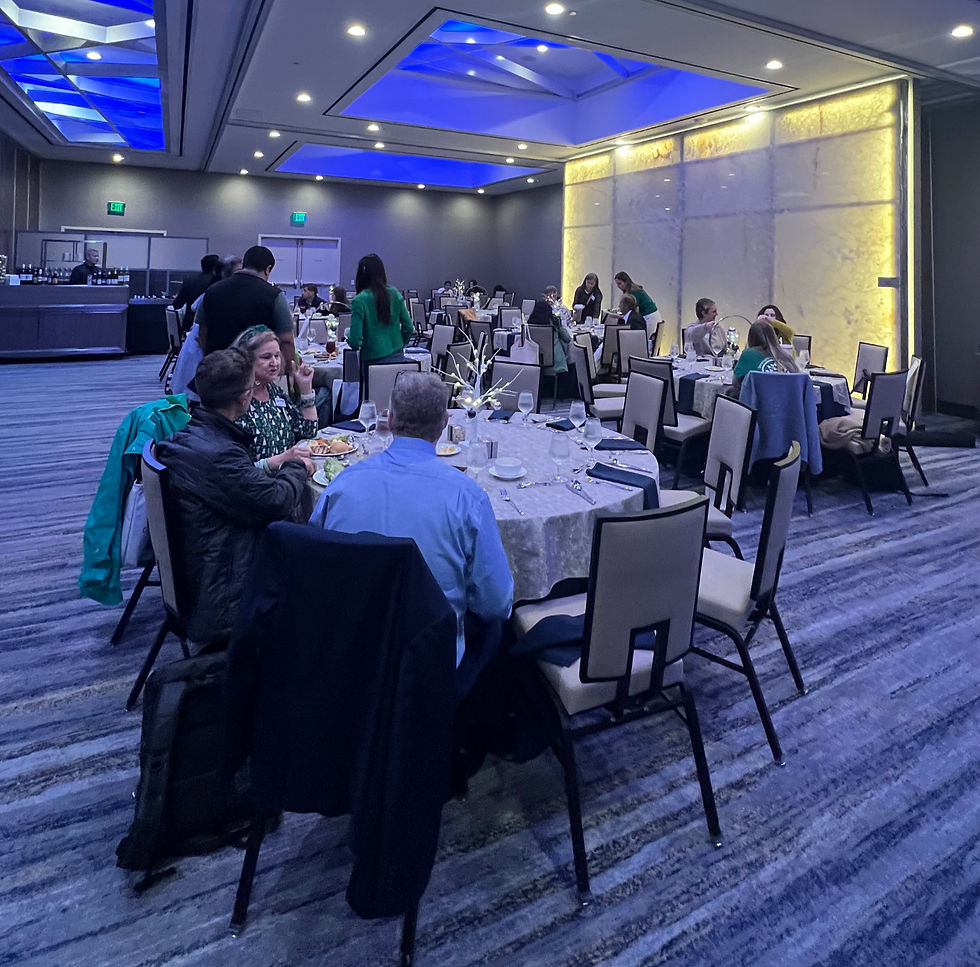
The conference concluded with a community dinner attended by speakers, physicians, and participants, offering a meaningful opportunity for connection and reflection. The food was excellent too.
Closing Thoughts
Attending the CCF Houston Day Symposium reinforced the importance of global collaboration, patient engagement, and ongoing advocacy. C3 is committed to sharing what we learn internationally and translating it into meaningful information, support, and progress for people affected by cholangiocarcinoma across Canada.
We are grateful to the Cholangiocarcinoma Foundation and the Houston clinical teams for hosting such an informative and inspiring event—and to our Canadian patient representatives for helping ensure our voices were heard.


Comments